

A WiFi band is a specific wireless broadcast frequency that a WiFi device can use to send or receive data. The WiFi bands that are available for devices to use are standardized to maintain compatibility with all kinds of devices and to meet regional broadcast regulations, though not all devices are capable of using all WiFi bands.
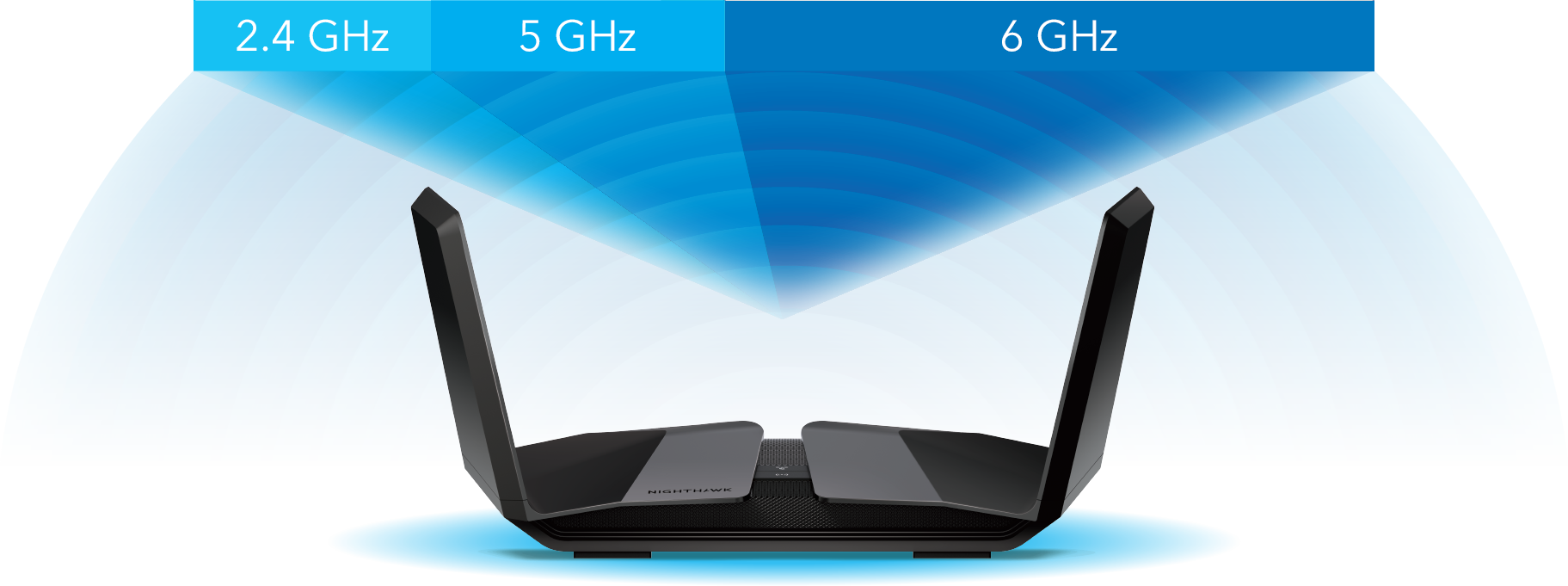
For networking equipment, the number of bands that a device has typically indicates the number of radios that a device uses to broadcast WiFi signals. For example, a tri-band router has three radios broadcasting a combination of different frequencies. The router might broadcast a different frequency on each radio, might use two radios to broadcast a certain frequency and the third to broadcast a different frequency, or might use all three radios to broadcast the same frequency (though this arrangement is uncommon).
Some devices reserve a WiFi band for a specific purpose to improve performance. For example, Orbi mesh systems use a WiFi band exclusively for communication between the router and satellites (known as dedicated backhaul). This wireless backhaul band allows Orbi mesh devices to communicate at high speeds without fighting your other WiFi devices for connection bandwidth, which improves the speed of your whole home network. For more information, see What is backhaul?
The most common WiFi bands are 2.4 GHz, 5 GHz, and 6 GHz, though some devices support uncommon standards like 60 Ghz for specific applications. Generally speaking, higher frequencies enable greater speeds but have reduced broadcast range. For more information about the benefits and drawbacks of each wireless frequency, see What is the difference between 2.4 GHz, 5 GHz, and 6 GHz wireless frequencies?
The number and type of WiFi bands that you need for your network depends on the number and type of WiFi devices that you use. A dual-band router, access point, or mesh system with 2.4 GHz and 5 GHz bands is the minimum that you should consider for modern devices. If you have a lot of devices, you might need a tri-band router or access point with two 5 GHz radios, or a tri-band Orbi mesh system with dedicated backhaul. If you use the newest WiFi devices or want to future-proof your network, a tri-band router or access point with 2.4 GHz, 5 GHz, and 6 GHz radios, or a quad-band Orbi mesh system with dedicated backhaul is the best choice.
For more information about router and access point WiFi bands:
- What is a tri-band router?
- What are the benefits of tri-band WiFi with 2.4, 5, and 6 GHz bands?
- Why do I need a Tri-band WiFi access point in my network?
For more information about mesh system WiFi bands: